Cancer is one of the world's most significant health challenges. According to the World Health Organization (WHO), in 2022 alone, there were approximately 20 million new cancer cases and 9.7 million cancer-related deaths worldwide, with new cases projected to exceed 35 million by 2050. As the global cancer burden continues to rise rapidly, traditional treatment approaches like surgery, radiotherapy, and chemotherapy have achieved certain success in prolonging patient survival. However, many cancers, especially refractory ones like pancreatic cancer, still have very low survival rates, and issues like recurrence and drug resistance often occur in advanced stages after prolonged traditional treatment. This has prompted scientists to explore more precise and effective treatment approaches.
In recent years, immunotherapy, which harnesses the body's immune system to fight cancer, has emerged at the forefront of oncology research. Among the various immunotherapies, cancer vaccines have attracted considerable attention due to their unique ability to train the immune system to recognize and attack cancer cells.
Unlike vaccines that prevent infectious diseases, cancer vaccines are primarily therapeutic, designed to treat existing cancers. They function by presenting tumor-specific antigens to the immune system, thereby activating T cells and other immune cells to destroy cancer cells. As of 2025, significant progress has been made in cancer vaccine R&D, with multiple clinical trials demonstrating the potential of mRNA vaccines and personalized peptide vaccines in cancers such as pancreatic, lung, and renal cancer, providing new therapeutic opportunities for patients.
Current Status of Cancer Vaccine Technology Platforms
Cancer vaccines differ from preventive vaccines (like the HPV vaccine) in that they stimulate the immune system to recognize and attack cancer cells for therapeutic purposes. An ideal cancer vaccine is designed to induce lasting anti-tumor immune memory, eliminate tumors, eradicate minimal residual disease, and minimize off-target or adverse effects. It should be able to eliminate cancer cells throughout the body while reducing the risk of tumor recurrence or metastasis.
Currently, cancer vaccines are primarily categorized into four technology platforms: peptide vaccines, nucleic acid vaccines, viral vaccines, and cell-based vaccines, each presenting distinct advantages and challenges.
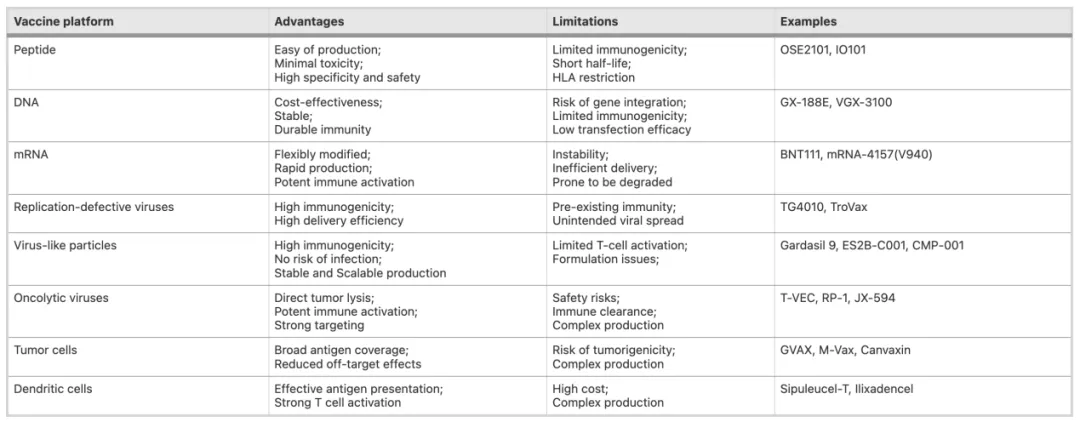
Figure: Comparison of Characteristics of Different Cancer Vaccine Technology Platforms (Source: Cancer vaccines: current status and future directions/Journal of Hematology & Oncology)
Peptide Vaccines
Peptide vaccines work by mimicking antigens on the surface of cancer cells, inducing T cells to produce specific immune responses. They offer core advantages such as high specificity, low toxicity, and ease of production.
Research into peptide vaccines has now covered various malignant tumors, showing positive application prospects in some cancer types. For example, OSE2101 (Tedopi) is a peptide vaccine for HLA-A2 positive non-small cell lung cancer (NSCLC) patients. In an early Phase II study, the median overall survival (OS) for advanced NSCLC patients reached 17.3 months. In the subsequent Phase III clinical trial ATALANTE-1 (NCT02654587), HLA-A2 positive patients resistant to immunotherapy who received OSE2101 treatment had a median OS of 11.1 months, significantly better than the 7.5 months in the chemotherapy group, with a 41% reduction in the risk of death, and post-progression survival extended to 7.7 months (compared to 4.6 months in the chemotherapy group). Furthermore, in 2025, peptide vaccines targeting KRAS-mutant colorectal cancer and pancreatic cancer showed potential in Phase I/II clinical trials, aiming to evaluate their efficacy in specific genetic backgrounds.
Currently, peptide-based cancer vaccines continue to advance in clinical research leveraging their technical advantages. However, limited by their inherent characteristics, their efficacy varies across different cancer types and patient subgroups. Future efforts still require further exploration, optimization, and validation in areas such as multi-epitope design to expand HLA coverage, and combination with immune checkpoint inhibitors to overcome microenvironment suppression.
Nucleic Acid Vaccines
Nucleic acid vaccines are primarily classified into DNA vaccines and mRNA vaccines. They function by delivering genetic material encoding antigens into the patient's body to induce an immune response. Leveraging their inherent immunogenicity, nucleic acid vaccines can effectively induce robust humoral immune responses and have shown good potential in treating both infectious diseases and cancer. Compared to traditional vaccines, nucleic acid vaccines also offer high efficiency and cost-effectiveness.
Among them, mRNA vaccines have attracted considerable attention due to their success in COVID-19 vaccines. For instance, BNT122 (autogene cevumeran), an mRNA vaccine co-developed by BioNTech and Genentech (a Roche subsidiary), when combined with chemotherapy and the anti-PD-L1 immune checkpoint inhibitor atezolizumab in a Phase I clinical trial, significantly reduced the risk of recurrence in patients with pancreatic ductal adenocarcinoma (PDAC). The trial results demonstrated that 8 out of 16 patients developed robust, antigen-specific T cell responses, and these patients exhibited significantly prolonged recurrence-free intervals. Furthermore, in 2025, the Markey Cancer Center in the UK is conducting clinical trials of mRNA vaccines targeting pancreatic cancer and non-small cell lung cancer, with preliminary results indicating effective induction of immune responses.
Viral Vaccines
Viral vaccines are primarily categorized into three types: vaccines against oncogenic viruses, replication-deficient viral vector vaccines, and oncolytic virus vaccines.
Among these, vaccines against oncogenic viruses are primarily used for cancer prevention, exemplified by several successfully marketed vaccines targeting HPV and HBV. In recent years, virus-like particle (VLP) vaccines have garnered significant attention due to their high immunogenicity and safety, and they have also demonstrated promising therapeutic potential.
feature adjuvant-like properties, can induce innate immunity, accommodate large DNA fragments, exhibit high transfection efficiency, and, in the case of some vectors (e.g., adenovirus), do not integrate into the host genome, thus offering a favorable safety profile. Clinically, the adenovirus-based Nadofaragene firadenovec demonstrated a complete response (CR) rate of 53.4% at 3 months in a Phase III trial for BCG-unresponsive non-muscle-invasive bladder cancer, with 45.5% of patients maintaining the response at 12 months. The product was approved by the FDA in 2022 and is marketed under the brand name Adstiladrin®.
Oncolytic viruses, as an emerging therapy, can selectively kill tumor cells while stimulating the body's anti-tumor response. Upon infection of tumor cells, oncolytic viruses induce the production of free radicals and cytokines, with the cytokines further activating immune cells. This process typically leads to tumor lysis and the release of tumor-associated antigens (TAAs) and other related substances.
For example, Talimogene laherparepvec (T-VEC, Imlygic), the first oncolytic virus vaccine approved by the US FDA in 2015, is based on herpes simplex virus type 1(HSV-1). In the OPTiM Phase III clinical trial, patients in the T-VEC group had a median overall survival (OS) of 23.3 months, compared to 18.9 months in the GM-CSF group. Another next-generation oncolytic virus, RP-1, enhances anti-tumor activity by expressing the vesicular stomatitis virus glycoprotein-transmembrane domain fusion protein. In the IGNYTE-3 clinical trial, when combined with an anti-PD-1 inhibitor, RP-1 achieved an objective response rate (ORR) of 33.6%, a median duration of response of 21.6 months, and 85% of responses lasted over one year.
Cell-based Vaccines
Cell-based vaccines primarily consist of whole tumor cell vaccines and dendritic cell (DC) vaccines loaded with tumor antigens. Their distinct advantage lies in the high degree of personalization achievable through autologous sources.
Whole tumor cell vaccines employ autologous or allogeneic tumor cells, which are inactivated to enhance their immunogenicity. This type of vaccine is capable of presenting a large number of tumor-associated antigens, including tumor-specific mutant antigens, to the immune system, simultaneously delivering both CD4 and CD8 epitopes.
Dendritic cell (DC) vaccines loaded with tumor antigens are generated by extracting DCs from the patient's body. DCs are the most potent antigen-presenting cells in the human body, capable of taking up, processing, and presenting antigenic information, thereby activating naïve T cells to initiate specific immune responses. The extracted DCs are subsequently loaded with the relevant tumor antigens and reinfused into the patient, ultimately activating a large population of T cells capable of specifically recognizing and eliminating cancer cells.
Regarding clinical progress, first-generation products of whole tumor cell vaccines have completed multiple Phase III trials, covering autologous, allogeneic, and genetically modified tumor cells. Although their clinical efficacy has not been definitively established, some combination regimens, such as GM-CSF-expressing cell vaccines combined with the CTLA-4 blocking antibody ipilimumab, show potential. In terms of DC vaccines, a representative example is KSD-101 – an autologous dendritic cell vaccine loaded with EBV-related antigens, presented at the 2024 European Hematology Association (EHA) congress. It showed significant effects in patients with EBV-related blood cancers who had failed or relapsed after conventional treatment. Among 5 patients evaluable for efficacy, both the complete response rate and objective response rate reached 100% within 12 weeks after injection.
Personalized Neoantigen Vaccines: The New Frontier in Cancer Treatment
Among various cancer vaccine technologies, personalized neoantigen peptide vaccines have gained significant attention due to their ability to target patient-specific tumor antigens.
These vaccines employ high-throughput sequencing to identify somatic mutations in tumors and generate neoantigens. As these antigens are exclusively expressed in cancer cells and absent in normal cells, they serve as ideal targets for immunotherapy. Recent advances in high-throughput sequencing, artificial intelligence (AI), and nanotechnology have markedly advanced neoantigen prediction and the development of peptide vaccines, enabling personalized peptide vaccine therapy for cancer.
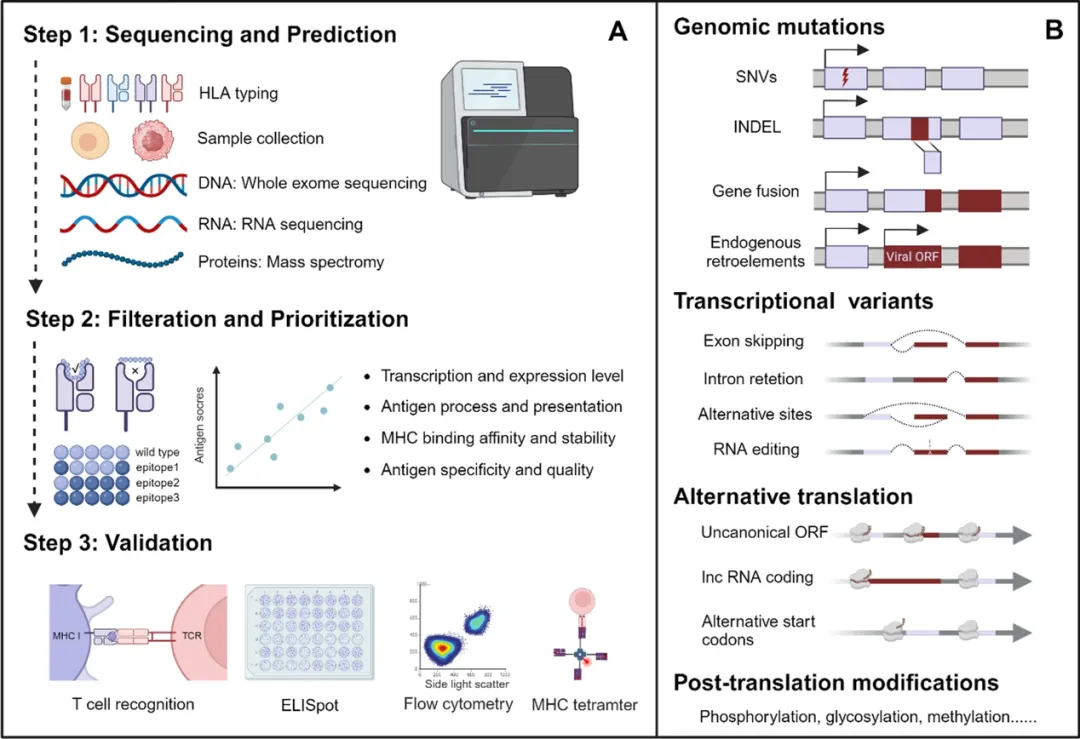
Figure: Identification and Process of Cancer Neoantigens (Source: Cancer vaccines: current status and future directions/Journal of Hematology & Oncology)
Peptide vaccines are now one of the hottest research directions in cancer vaccines. Around the world, multiple peptide vaccines have been developed against infectious diseases like HIV and HCV, as well as solid tumors. Today, peptide vaccines are evolving from "single-antigen" designs to full-chain solutions that combine smart design, precise delivery, and combination therapies.
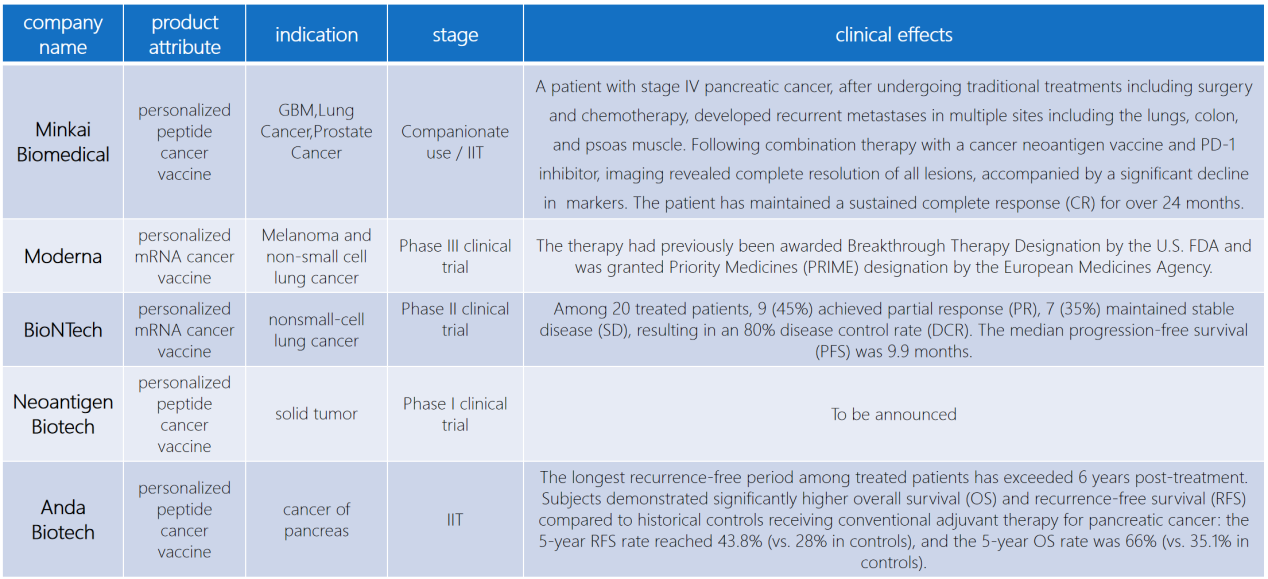
The emerging field of personalized peptide cancer vaccines is also attracting numerous pioneers. Several startup biotech companies focusing on the R&D, clinical trials, and commercialization of anti-tumor personalized peptide vaccines have emerged domestically and internationally, including leading innovators such as Minkai Biomedical, Anda Biotech, and Niu Anjin Biotech.
Taking Minkai Biomedical as an example, its core competitive advantage lies in its ability to predict and screen tumor neoantigens using high-throughput sequencing and artificial intelligence(AI) technologies. Minkai's R&D process includes the following key steps:
1.High-throughput sequencing: Analyze the genome of patient tumor samples to identify tumor-specific mutations.
2.Artificial intelligence prediction: Use AI algorithms to predict which mutations are likely to produce highly immunogenic neoantigens.
3.Patent screening system: Select neoantigens that can be effectively presented by MHC I/II molecules and trigger T-cell receptor (TCR) clonal expansion.
4.Personalized vaccine design: Synthesize targeted peptide vaccines based on the patient's specific mutation profile.
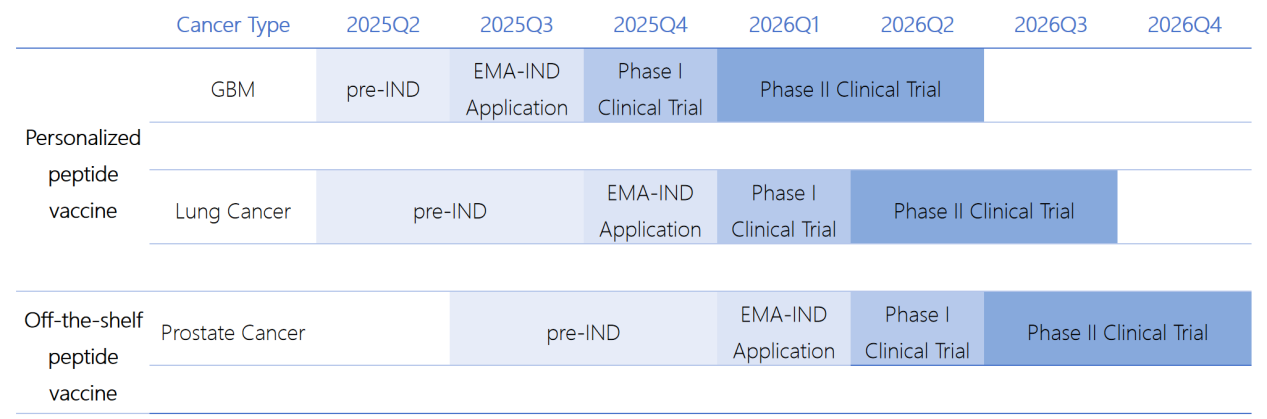
Additionally, Minkai has developed multi-omics and AI-driven companion diagnostic markers, further improving treatment precision. Currently, Minkai Biomedical's current R&D platform covers pipelines for prevalent and difficult-to-treat tumors such as glioblastoma, lung cancer, and prostate cancer, with plans to expand indications in the future to cover all solid tumors.
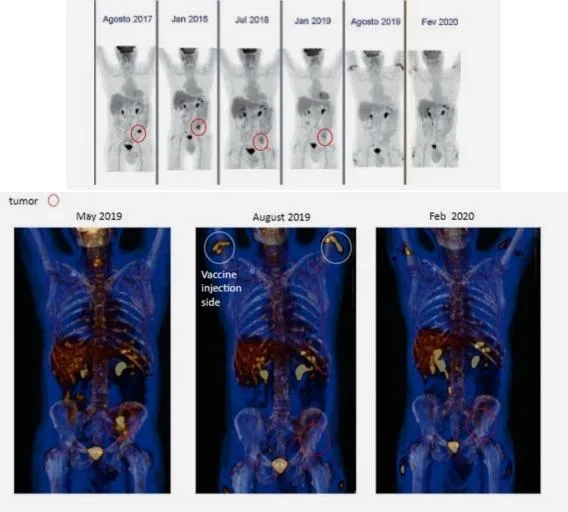
Among them, the personalized peptide cancer vaccine demonstrated favorable clinical outcomes in IIT studies: a stage IV pancreatic cancer patient experienced recurrence and metastasis after standard treatment. Following combined therapy with the personalized tumor neoantigen vaccine and a PD-1 monoclonal antibody, imaging revealed complete disappearance of tumor lesions, tumor markers decreased significantly, and the patient achieved long-term complete remission.
In the clinical progress of refractory cancers like pancreatic cancer, personalized peptide vaccines are also showing unique advantages compared to other vaccine technologies.
Professor Markus Maurer, Chief Scientist at Minkai Biomedical and Director of the Immunotherapy and Cell Center at the Champalimaud Foundation, has conducted multiple studies on personalized cancer vaccines and published numerous papers. One paper titled "Targeting Neoepitopes to Treat Solid Malignancies: Immunosurgery" notes that therapeutic strategies involving both personalized and shared cancer vaccines play an important role for cancer patients. The study found that personalized cancer vaccines, carrying individual neoantigens via peptide formulations or RNA constructs, promote durable immune responses in advanced cancer patients.
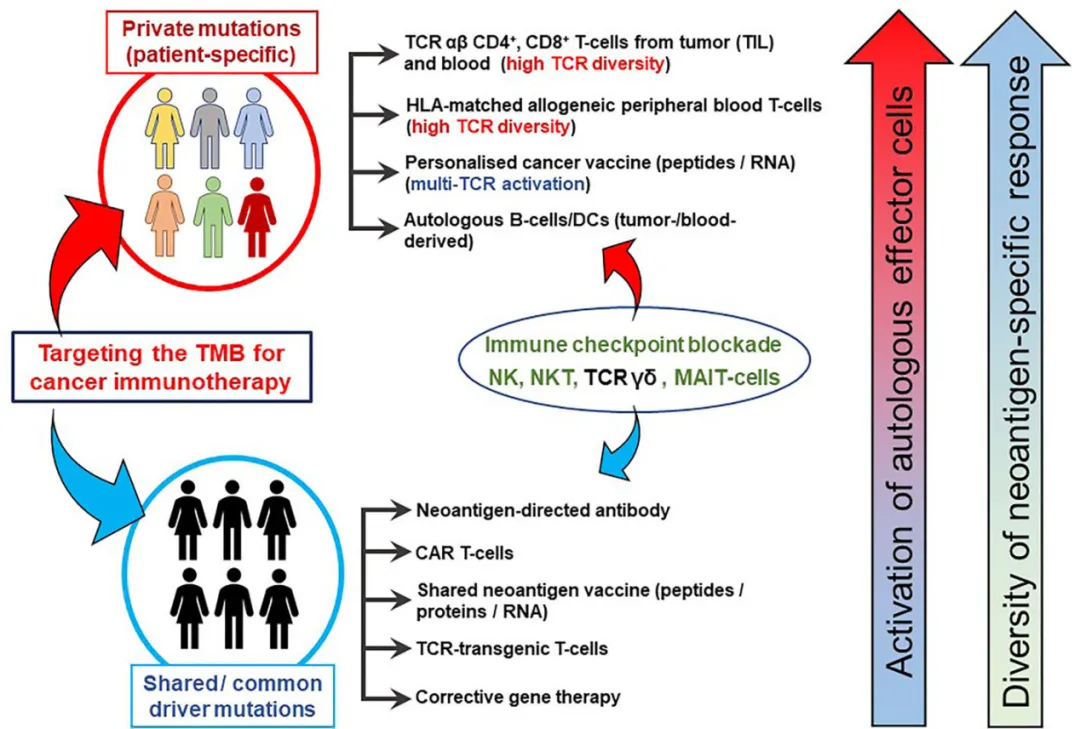
Figure: Champalimaud Foundation Center for Unknown’s Tumor Mutational Burden (TMB)-targeted immunotherapy strategy, and therapeutic strategies for personalized and shared cancer vaccines (Source: Targeting Neoepitopes to Treat Solid Malignancies: Immunosurgery)
At a theme summit dedicated to health innovation convened by the renowned international media CNN, Professor Maurer, while discussing the core role of the "Hospital of the Future" in promoting personalized cancer treatment, clearly stated: "Each tumor's mutations are different, requiring personalized therapies" and "The key is to enable T cells to regain the ability to recognize tumors." These views highly align with the R&D philosophy of personalized peptide vaccines – "customizing vaccines based on the patient's own tumor mutations" – and their goal of "activating immune cells for precise cancer fighting," forming a scientific and logical correlation.
Professor Maurer emphasized in his speech: "The human innate immune system inherently holds the power to fight cancer – out of every million immune cells, there is always one that can precisely recognize cancer mutations." Today, personalized anti-tumor peptide vaccines, centered on "awakening this innate immunity," are making the precision of cancer treatment a reality. He further explained: "The immune cell's ability to recognize cancer mutations is the safest anti-cancer weapon nature has given humans." In a successful immune response, immune cells "precisely eliminate" cancer cells without harming healthy tissue – and this is the core advantage of peptide vaccines.
It is reported that Professor Maurer and the Champalimaud Foundation have established close and in-depth collaborations in the field of tumor immunotherapy with multiple international top-tier research institutions and companies, including the US MD Anderson Cancer Center, Stanford University, and BioNTech. It is believed that Minkai Biomedical, under the leadership of Professor Maurer and leveraging the Foundation's global collaboration network, will advance the clinical translation of peptide vaccines and related advanced cancer treatment technologies to the world, benefiting patients globally.
Overall, the cancer vaccine industry is undergoing a profound transformation dominated by technological innovation. New-generation technology platforms represented by peptide vaccines are becoming key engines driving industry development, leveraging their core advantages of precise targeting, high safety, and short R&D cycles.
This trend, if it receives explicit support from policies and positive responses from the capital market in the future, will undoubtedly jointly create a potentially huge incremental market – market forecasts indicate that the global cancer vaccine market size is expected to grow from approximately USD 10-12 billion in 2025 to USD 15-40 billion by 2030. The vigorous rise of personalized treatment will further inject strong momentum into this growth.
On this promising track, those who can build a powerful competitive edge through forward-looking strategic planning and solid technological barriers are poised to gain a first-mover advantage in the upcoming "golden decade" of the cancer vaccine industry. Of course, continuous clinical validation and regulatory support will be key to achieving this goal, and the ultimate beneficiaries will undoubtedly be the countless patients whose clinical needs remain unmet.
About Minkai Biomedical
Minkai Biomedical established in 2025, is a biopharmaceutical company co-founded by leading domestic and international medical experts and renowned industrial investors.
Relying on globally top-tier biopharmaceutical R&D institutions and teams, Minkai Biomedical focuses on the R&D, clinical development, and commercialization of anti-tumor personalized peptide vaccines, providing global cancer patients with personalized, precise immunotherapy technologies, products, and solutions centered on peptide vaccines. Leveraging China's strong peptide production capacity, the company is committed to meeting the substantial demand for clinical-grade peptide vaccines and achieving global commercial reach for tumor peptide vaccines.
About the Champalimaud Foundation
The Champalimaud Foundation is Minkai Biomedical's strategic partner. Located in Lisbon, Portugal, it is a world-renowned cancer treatment and research center, known for its advanced translational medicine, personalized treatment strategies, and interdisciplinary teamwork. The Foundation is at the forefront of science, committed to exploring scientific discoveries that benefit humanity and advancing new standards of knowledge.
The Botton-Champalimaud Center under the Foundation is the world's first cancer center simultaneously dedicated to both research and treatment of refractory cancers like pancreatic cancer. The Center brings together world-class experts covering multiple disciplines such as surgery, clinical medicine, clinical trials, tumor immunology, bioinformatics, and computational biology. The Center features advanced technology, services, and equipment, including a GMP laboratory for cell preparation that is at the cutting edge in Europe and even the world, as well as research laboratories, a day hospital, a surgical center, and facilities for hospitalization and intensive care, closely integrating science, clinical practice, and patients to provide innovative and effective treatment methods for patients with refractory cancers.
Forward-Looking Statements
The information released in this article may contain certain forward-looking statements regarding views, assumptions, expectations, estimates, projections, and understandings of future matters. Forward-looking statements are not guarantees or assurances of future performance. The Company’s development is subject to risks and uncertainties. The Company has no obligation to update these forward-looking statements continuously. The Company shall not be liable for any failure of any forward-looking statement to be realized or for it to prove incorrect.
References:
https://jhoonline.biomedcentral.com/articles/10.1186/s13045-025-01670-w
https://www.thelancet.com/journals/lancet/article/PIIS0140-6736(25)00553-7
Note: This article is adapted from VCBeat.