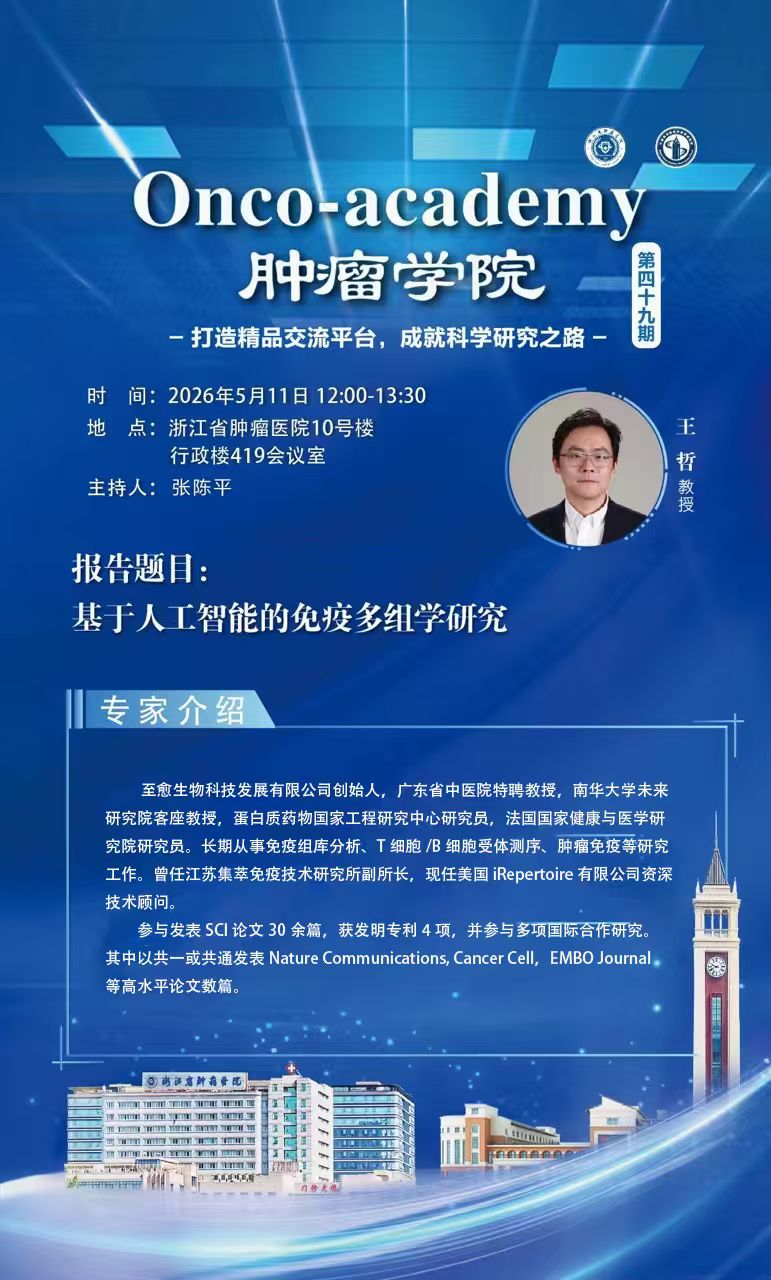
On May 11, 2026, Professor Wang Zhe, CTO of Minkai Biomedical, was invited to deliver a keynote presentation titled “AI-Driven Immunomics Research” at Zhejiang Cancer Hospital. The presentation not only showcased Professor Wang’s years of in-depth research in the field of immunomics, but also revealed the underlying logic and application prospects of Minkai Biomedical’s core technology platform.
“The immune system is humanity’s best physician. It has the ability to recognize disease signals at a very early stage,” Professor Wang emphasized during the presentation. From the differential diagnosis of early-stage lung cancer, to immune monitoring during CAR-T therapy, to the precise screening of personalized tumor neoantigen peptide vaccines, immunomics is decoding the language of the human immune system with unprecedented precision. Minkai Biomedical is at the forefront of this technological transformation.
01 From Basic Research to Clinical Application — What Can Immunomics “See”?
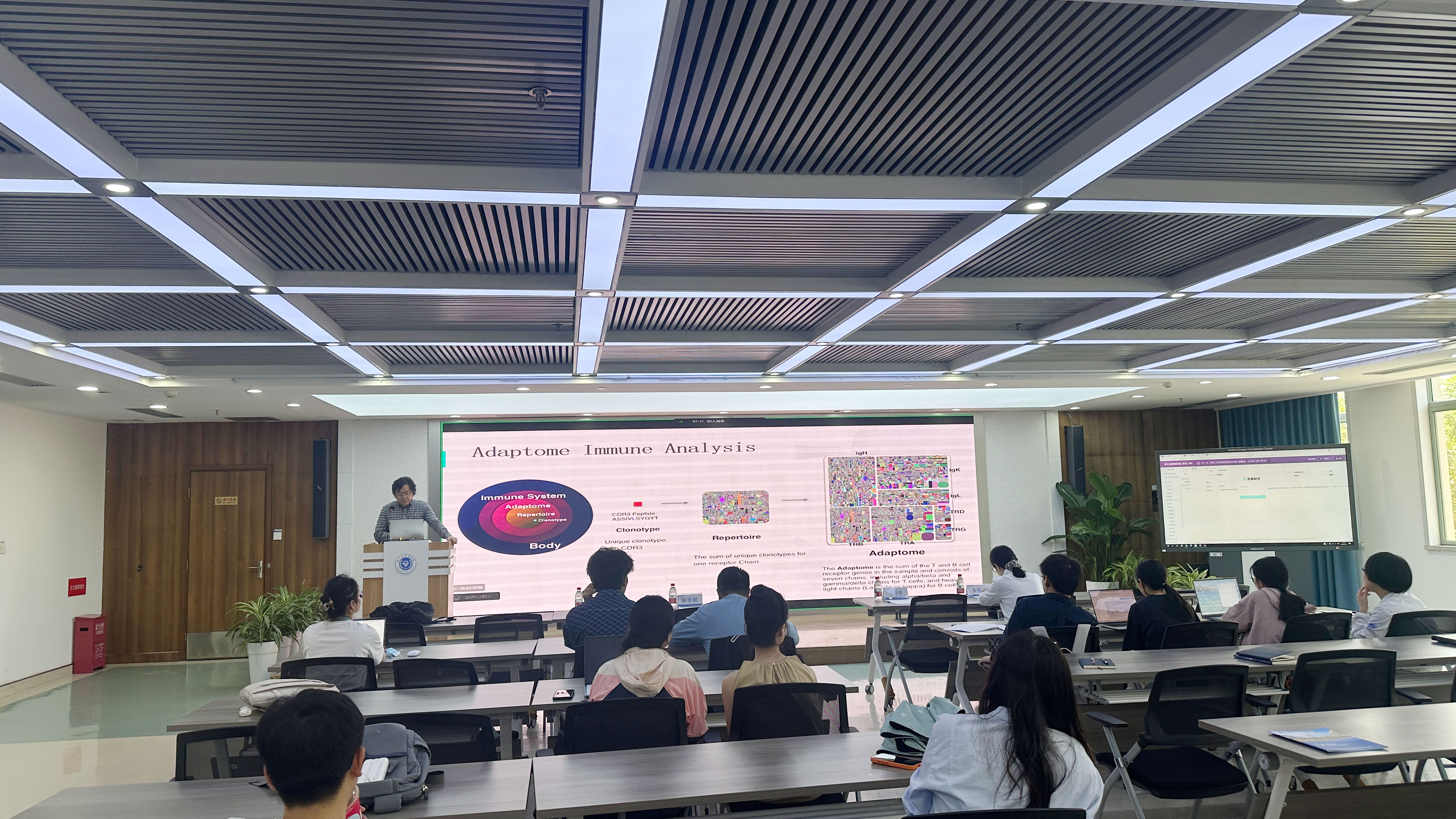
“The DNA fragments that make up the human immune repertoire are very short, but through random VDJ recombination and insertion, they can generate between 10¹⁵ and 10²³ possible combinations,” Professor Wang explained using a vivid analogy to help the audience understand. Each specific CDR3 sequence can be viewed as a “dot,” with the size of the dot representing the number of immune cells carrying the same sequence.
Through this visualization approach, researchers can directly observe the “full landscape” of an individual’s immune system — which clones are expanding, which are contracting, and how immune diversity changes over time.
This “language of immunomics” has become the foundation of Minkai Biomedical’s core technology platform. The company has established an “IT + BT” model that integrates high-throughput sequencing with artificial intelligence. Leveraging proprietary algorithms for neoantigen prediction and screening, along with its patented neoantigen selection system, the platform precisely identifies neoantigens that can be presented by MHC class I/II molecules and stimulate the expansion of specific TCR clones. Its predicted immunogenicity success rate has exceeded 95%, reaching an industry-leading level.
02 From Research to Products — How Minkai Biomedical Translates Discovery into Therapy
Several research findings presented by Professor Wang are highly aligned with the company’s core business strategy.
In the field of precision diagnosis, a collaborative study between Professor Wang and Xiangya Hospital demonstrated that only three immune-related genes are needed to accurately differentiate solitary versus multiple ground-glass nodule lung cancers using peripheral blood samples.
“Multiple primary lung cancers exhibit significant differences in gene mutations, but their immune repertoire characteristics are highly similar. Eighty percent of high-frequency immune clones found in tumor tissues can also be detected in peripheral blood.” This discovery provides important evidence for enriching tumor neoantigen-specific TCRs from peripheral blood for therapeutic applications.
In therapeutic monitoring, research on CAR-T therapy has entered the stage of multimodal integrated monitoring, requiring the integration of immune repertoire analysis, single-cell RNA sequencing, metabolomics, and other modules. In one study involving 12 patients with advanced colorectal cancer treated with gene-edited T cells, the infused target TCR clones remained detectable in peripheral blood after reinfusion, and their dynamic changes were completely consistent with CD8-positive cell levels and imaging results. As Professor Wang described it, “With a single blood draw, we can determine whether the infused cells are still present and whether they are functioning.”
These research achievements form the technological foundation of Minkai Biomedical’s integrated “precision diagnosis – combination therapy – immune monitoring” closed-loop system.
The essence of personalized tumor neoantigen peptide vaccines lies in the precise selection of patient-specific neoantigens to activate the patient’s own T cells and generate targeted immune responses. Within this process, immunomics serves as the “navigation system” — confirming whether the vaccine has successfully induced specific TCR expansion and tracking the dynamic evolution of immune responses.
03 Dual-Pipeline Strategy Focused on High-Incidence, Difficult-to-Treat Cancers — Sino-European Collaboration Making Advanced Therapies More Affordable
If immunomics represents the “eyes” that enable precise tumor recognition and make disease visible, then translating cutting-edge omics technologies into safe, efficient, and accessible clinical therapies remains an even greater challenge in precision cancer immunotherapy.
Addressing this industry challenge, Minkai Biomedical has focused deeply on the tumor neoantigen peptide vaccine field, emphasizing both technological translation and clinical accessibility. The company has innovatively established a dual-track pipeline strategy consisting of both personalized and universal tumor neoantigen peptide vaccines. This strategy focuses on high-incidence solid tumors with urgent unmet clinical needs and large patient populations, comprehensively advancing the clinical translation and broader accessibility of cutting-edge technologies through leading international collaborations, supportive domestic policies, high-quality hospital-enterprise partnerships, and innovative manufacturing models.
To strengthen its overseas clinical R&D foundation and accelerate its global technology deployment, Minkai Biomedical entered into a deep strategic partnership with the Champalimaud Foundation in October 2025, officially launching the “Innovative Cancer Vaccines and Immunotherapy Research Center.” The foundation possesses Europe’s leading clinical resources and GMP laboratories, and its Botton-Champalimaud Centre is the world’s first cancer center dedicated simultaneously to the research and treatment of difficult-to-treat cancers such as pancreatic cancer.
Within the domestic market, Minkai Biomedical has strategically leveraged favorable industry policies by strictly adhering to the innovative regulatory requirements and implementation standards set forth in Dccree No. 818 of the State Council of the People's Republic of China on the Regulations on the Administration of Clinical Rrsearch and Translation Application of New Biomedical Technologies. By utilizing dedicated compliance pathways for personalized gene and cell therapies, the company is efficiently advancing the clinical translation of personalized neoantigen vaccines in China, significantly shortening development timelines and accelerating technological iteration.
The company has further strengthened local hospital-enterprise collaborations and has conducted in-depth exchanges and discussions with leading institutions, including Zhejiang Cancer Hospital and Ruijin Hospital, regarding clinical projects for personalized tumor neoantigen peptide vaccines across relevant indications. Focusing on high-incidence and difficult-to-treat cancers in China, the company continues to accelerate domestic technology validation and clinical implementation by leveraging the clinical resources, diagnostic and treatment expertise, and scientific research capabilities of China’s top-tier tertiary hospitals.
At the same time, by leveraging China’s peptide manufacturing advantages and adopting a cross-border production model combining “Chinese raw materials + European formulation,” Minkai Biomedical expects to reduce production costs by 60%–75%. This model could transform personalized peptide vaccines from a luxury treatment available only to a small number of patients into a more accessible therapeutic option.
04 Making Cancer a Chronic Disease — Minkai’s “Long-Term Vision”
“The immune system is the best doctor,” Professor Wang concluded at the end of his keynote speech. “What we need to do is help this ‘doctor’ work better.”
During the Q&A session, an audience member asked: “Given the strong heterogeneity of tumors, can personalized vaccines truly cover all patients?”
“The proportion of shared TCRs between individuals is only 1%–3%, and even among identical twins it is less than 6%. The vast majority of TCRs are unique to each individual — which is precisely why we need personalized treatment rather than a ‘one-size-fits-all’ approach,” Professor Wang replied. His response was thought-provoking. Minkai Biomedical’s technology platform is designed precisely to decode this individualized immune language. Using immunomics as its “eyes” and peptide vaccines as its “weapons,” Minkai Biomedical aims to make cancer a manageable and potentially curable chronic disease.
Minkai Biomedical has already established a clear globalization roadmap: in the short term, the company will focus on coordinated Sino-European collaboration to complete clinical validation and regulatory filing for its core products while building technological and brand advantages; in the medium term, it plans to expand into Hong Kong SAR, China, the United States, and emerging markets; and in the long term, it aims to build a global commercial ecosystem.
As Professor Wang stated in his presentation, the immune system has its own language, and Minkai Biomedical is becoming an “expert decoder” of that language.